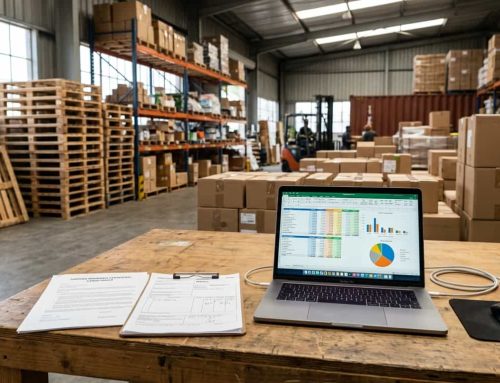

Running an IT company in Hong Kong means managing more than client deadlines. Whether your developers work near Cyberport, your consultants meet clients in Central, or your support team operates from Tsim Sha Tsui, software, equipment and salaries quickly add up.
Yet paying a business expense does not automatically mean you can deduct it immediately. A monthly cloud subscription, a server purchase and the acquisition of software intellectual property may require different tax treatment.
Hong Kong IT company tax deductions become easier to manage when you separate operating expenses, qualifying capital expenditure and costs requiring specialist review.
At Pinetree, our Hong Kong accountants help businesses organise their records, connect payroll with bookkeeping, and prepare clearer tax computations. Here is what IT business owners should understand before their next profits tax return.
How Hong Kong Profits Tax Deductions Work for IT Companies
The starting point is whether an expense was incurred in producing profits chargeable to Hong Kong profits tax.
Section 16 of the Inland Revenue Ordinance provides the general deduction framework. Private expenditure is not deductible, while capital expenditure generally requires a specific deduction provision or capital allowance.
For IT companies, this creates three common categories:
| Expense category | Examples | Typical approach |
| Operating expenses | Business software subscriptions, hosting, employee remuneration | Generally deductible to the extent incurred in producing chargeable profits |
| Qualifying computer expenditure | Purchased business computers and qualifying software | May qualify for immediate deduction under section 16G |
| Other capital expenditure | Office furniture, improvements and purchased intellectual property rights | Review the applicable allowance or specific deduction rules |
The distinction matters because accounting treatment and tax treatment are not necessarily identical. An asset depreciated over several years in your accounts may qualify for an immediate tax deduction.
A deduction is not a tax refund
A deduction reduces assessable profits, not the tax bill dollar for dollar.
Eligible corporations using Hong Kong’s two-tiered profits tax rates pay 8.25% on their first HK$2 million of assessable profits and 16.5% on the remainder. Connected entities face restrictions: generally, only one nominated entity can use the two-tiered rates.
For example, a HK$100,000 allowable deduction reduces tax by HK$16,500 where the entire deduction falls within the 16.5% band. Actual savings depend on profitability, applicable rates and other adjustments.
Software and Cloud Subscription Tax Deductions in Hong Kong
IT businesses often pay for dozens of digital tools. Recording them consistently helps prevent missed expenses and duplicate claims.
Recurring software and cloud services
Business subscriptions generally fall within ordinary operating expenditure where they support the production of chargeable profits.
Common examples include:
- Development tools and code repositories.
- Project management and collaboration platforms.
- Cloud hosting, storage and computing services.
- Cybersecurity subscriptions and monitoring.
- Accounting, payroll and customer management software.
- Business-use AI subscriptions and API charges.
Keep supplier invoices, subscription agreements and payment records. Where an account includes private use, identify and exclude the private portion.
Annual subscriptions also need attention around year-end. Paying in advance does not automatically establish that the entire payment belongs in that year’s tax computation.
Purchased software versus intellectual property
Qualifying capital expenditure on computer software may receive an immediate deduction under section 16G.
However, buying software for business use is not necessarily the same as acquiring copyright, patents or other intellectual property rights. A source-code acquisition or bespoke development contract should be reviewed according to what the agreement actually transfers.
Before a substantial purchase, establish:
- What the company owns or licenses.
- Whether the payment covers software, implementation, support or intellectual property.
- How the expenditure supports chargeable profits.
- Which deduction provision applies.
Our bookkeeping and accounting MIS services help organise these costs into useful categories rather than leaving everything under “IT expenses”.
Computer Equipment, Servers and Office Fit-Out Tax Treatment
Hong Kong provides immediate deduction treatment for qualifying computer hardware and software. However, not everything purchased for a technology office belongs in that category.
Computers and servers
Business laptops, desktops and servers are common candidates for review under section 16G.
For instance, HK$120,000 spent on qualifying business computers may be deductible in the relevant basis period rather than through ordinary depreciation allowances. Eligibility, business use and the expenditure’s precise nature still matter.
Maintain an asset register recording:
- Purchase date and supplier.
- Cost and invoice reference.
- Equipment description and serial number.
- Assigned employee or location.
- Business-use allocation.
- Disposal date and proceeds.
Accounting depreciation should not simply be carried into the tax return without reviewing the appropriate tax adjustment.
Furniture, repairs and refurbishment
Other office expenditure follows different rules.
| Cost | Key tax consideration |
| Qualifying computer hardware | Potential immediate deduction |
| Desks, chairs and other qualifying plant | Capital allowances rather than automatic immediate expensing |
| Routine equipment repairs | Generally deductible where business-related |
| Qualifying premises refurbishment | Generally deductible over five years in equal instalments |
| Mixed office fit-out contracts | Separate components before determining treatment |
General plant and machinery allowances can include a 60% initial allowance and annual allowances at prescribed rates of 10%, 20% or 30%.
A single contractor invoice may contain furniture, electrical work, computers and structural improvements. Request an itemised breakdown instead of applying one treatment to the entire project.
Pinetree’s audit arrangement services can support the year-end process alongside organised asset schedules and supporting documents.
Staff Costs, MPF and Software Development R&D Deductions
People costs deserve particular attention in an IT business. Developers, implementation consultants and support engineers may work across client projects, internal products and administration.
Salaries, bonuses and employer contributions
Employee salaries, bonuses and other remuneration are generally deductible to the extent incurred in producing chargeable profits.
Supporting records should connect employment contracts, payroll calculations, payment records and ledger entries.
Employer contributions to recognised retirement schemes are subject to specific deduction limits, generally linked to 15% of employees’ total emoluments. Do not confuse the employer’s expense with employee contributions withheld from salary.
For sole proprietors and partnerships, owners’ drawings or remuneration require different treatment from employee salaries. A company director’s genuine employment remuneration should not automatically be treated as a sole proprietor’s drawings.
Our payroll services support monthly payroll, MPF administration and employer reporting, helping keep staff costs traceable.
Enhanced deductions for qualifying R&D
Qualifying Type B research and development expenditure can attract:
| Qualifying expenditure | Deduction |
| First HK$2 million | 300% |
| Amount above HK$2 million | 200% |
This does not mean every software developer’s salary qualifies for triple deduction.
Routine maintenance, ordinary configuration and standard implementation should not automatically be presented as qualifying R&D. Eligibility depends on the activities, expenditure category, location and other statutory conditions.
For qualifying projects, retain technical objectives, evidence of technological uncertainty, testing records and staff time allocations.
Where HK$1 million genuinely qualifies for a 300% deduction, the total deduction is HK$3 million—not HK$3 million plus another ordinary deduction for the same expenditure.
Tax Records and Practical Planning for Hong Kong IT Businesses
Hong Kong’s ICT sector comprised approximately 17,000 companies employing around 119,400 people in 2024. Its value added reached HK$183 billion. These figures describe the wider ICT sector, not software companies alone.
For individual businesses, good records matter more than sector size. Business records generally need to be retained for at least seven years.
A practical monthly process is to:
- Collect software invoices and equipment receipts.
- Separate operating expenses, assets and potential R&D costs.
- Reconcile payroll, employer contributions and bank payments.
- Record private-use adjustments and project allocations.
- Review unusual transactions before filing.
Our tax return services help bring these records into the filing process.
Growing businesses may also need company formation support or ongoing corporate secretarial services. Companies recruiting internationally can explore our assistance in immigration documentation alongside their staffing plans.
Can a Hong Kong IT company deduct SaaS subscriptions?
Generally, business-related subscriptions can qualify as operating expenses. Check business purpose, private use and the period covered.
Can we deduct laptops immediately?
Qualifying business computer expenditure may receive immediate deduction under section 16G. Keep invoices and asset records.
Do all software development costs qualify for R&D deductions?
No. Enhanced deductions apply only where the activities and expenditure meet the relevant requirements.
Can Pinetree help our IT company organise tax deductions?
Yes. Our Tsim Sha Tsui team supports bookkeeping, payroll and tax return preparation. Call +852 5929 1766 to arrange a free consultation and discuss your company’s software, equipment and staff costs.